
GROW TOP-OF-FUNNEL INTEREST AND INQUIRIES
Find next year’s class before they find your competition
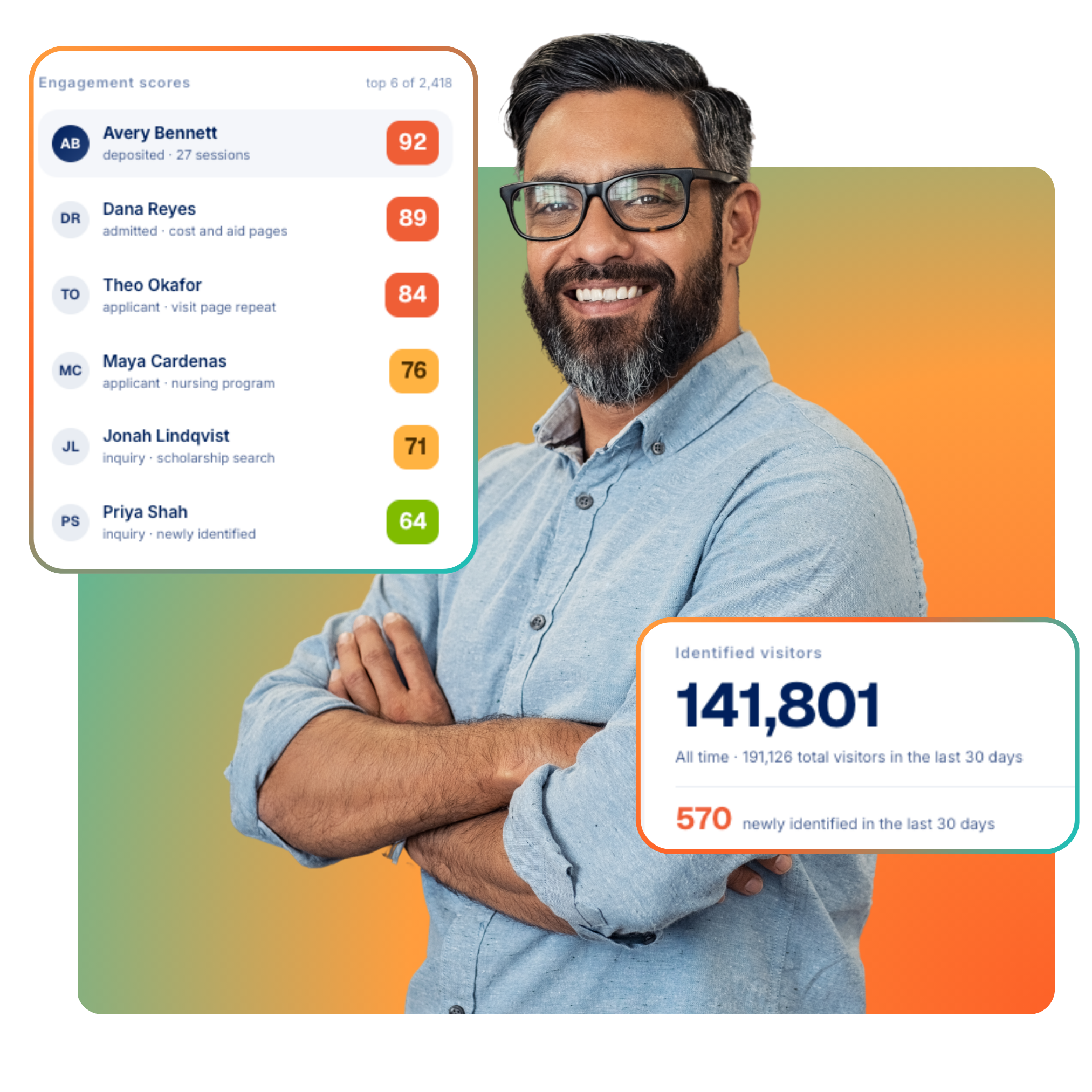
63% of students expect colleges to understand their interests based on how they engage with content alone, even before they fill out a form. That’s what we do best.
Capture builds behavioral profiles from the first anonymous website visit, creating individualized prospect experiences from day one.
Most decision-making happens
before the form
Students research institutions in a phase enrollment teams can’t see, comparing programs and narrowing their list before they ever reach your CRM. By the time they submit a form, they’ve usually already decided whether you’re a serious option (or not).
This is the dark funnel. We help you surface it so you can influence decisions earlier, create relevant recruitment journeys, and positively impact outcomes.
IDENTIFY ANONYMOUS TRAFFIC
Track interest as it forms, not after
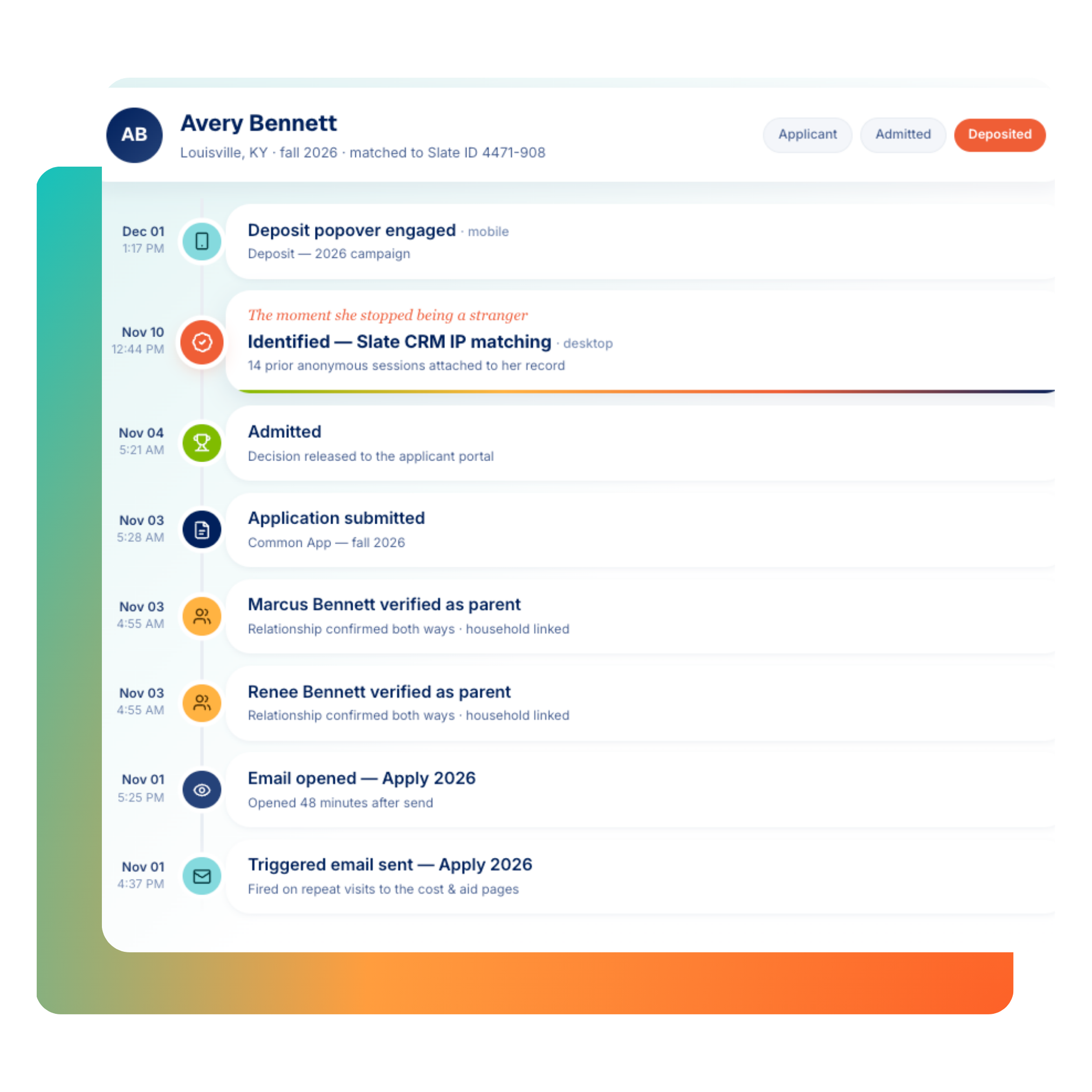
With Capture, you’ll build behavioral histories from the first anonymous visit, even without a form submission.
Track known and unknown visitors across web, email, and paid campaigns and immediately access prospects’ full behavioral histories when they identify themselves.

INDIVIDUALIZE THE RECRUITMENT EXPERIENCE
Move prospects forward, faster
With Capture, you’ll individualize the recruitment experience for known and anonymous prospects with behavior-informed content and campaigns across your website, email, and paid campaigns.
And with a dedicated team of experts managing content and campaigns for you, you can easily scale individualized campaigns without adding work to your plate.
PRIORITIZE YOUR OUTREACH
Know exactly where to focus
Understand which prospects to prioritize today, and get the insights you need to grow your pool efficiently using proven models that predict prospects’ likelihood to apply and enroll based on real-time behavioral insights and your institutional outcomes.

92%
Prospects identified on the first visit
+6.8pp
Percentage point increase in applications in year one
3x
Prospects who engage with Capture apply 3x faster, on average

“Capture has created a partnership that feels genuine, intentional, and committed to our success. Through our partnership, we have seen increases in inquiries, deposits, and yield.”
Heather Freeman, Associate Vice President for Enrollment, Xavier University of Louisiana
Explore Partner Success Stories


Show us your goal, and let’s chart the path together
We’d love to hear what you’re working toward and discuss how to get you there.
All your questions, answered.
Top-of-funnel enrollment marketing covers the early awareness and inquiry stages before a student formally raises their hand. It focuses on reaching prospective students while they are still researching institutions anonymously, then giving marketing and admissions teams a way to identify and engage them earlier. Strong top-of-funnel work widens the pool of students an institution can influence before the application window opens.
Most prospective students explore an institution’s website and content long before they submit an inquiry form. These prospects represent the dark funnel, or possible stealth applicants. Colleges reach them by capturing behavioral signals such as the pages, programs, and content each visitor engages with, then using that intent to individualize outreach. This turns anonymous traffic into an addressable top-of-funnel audience you can nurture toward conversion.
Demographic targeting reaches students based on fixed attributes like geography, test scores, or purchased list segments. Behavioral targeting reaches them based on what they actually do, such as the programs they browse, the emails they open, and the content they return to, which reflects real interest and intent. Behavioral data lets institutions individualize messaging and prioritize the students most likely to enroll, rather than treating an entire segment the same way.
Top-of-funnel growth is measured by the size and quality of the audience an institution can identify and engage early, including net-new inquiries, previously anonymous visitors converted to known prospects, and engagement across priority programs. The stronger measure ties those early signals to downstream outcomes, following students from first engagement through inquiry, application, and enrollment. Connecting top-of-funnel activity to closed enrollment is how teams prove which awareness efforts drive results.
Institutions can grow the top of the funnel by activating the audience already engaging with them, rather than only purchasing new lists. Identifying anonymous website visitors, re-engaging past inquiries, and individualizing content with behavioral intelligence surfaces qualified prospects that list buys miss. This makes existing website traffic and owned audiences a renewable source of top-of-funnel growth.
Traditional list-based outreach starts with purchased names and messages an entire segment the same way, regardless of whether each student has shown interest. Behavioral enrollment marketing starts with the students already engaging with an institution, identifies them from their activity, and individualizes outreach based on demonstrated intent. The behavioral approach reaches fewer students with far more relevance, which is what Capture is built around, and it ties every early touch to enrolled outcomes so teams can prove what worked.